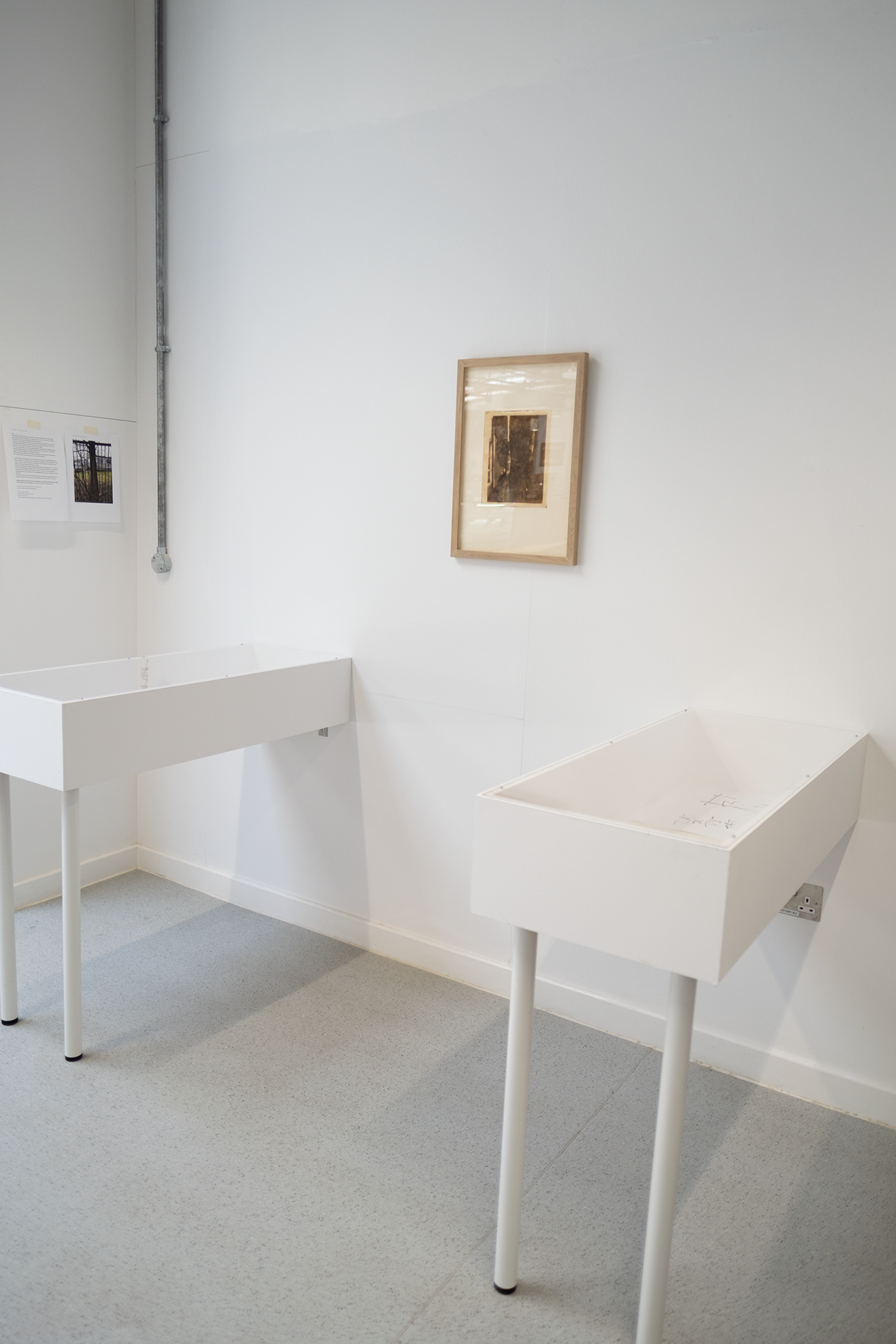
Justin Carter, The Event. 2025. Vitrines, bottle of ink, invitation letter with photograph, ink on paper, dimensions variable. Contributions from invited artists and writers will be added throughout the exhibition – each one invited to respond to the same ongoing ‘event’ on the fence boundary where a tree is forcing its way through the metal railings. [Photo credit: Michael Mersinis] 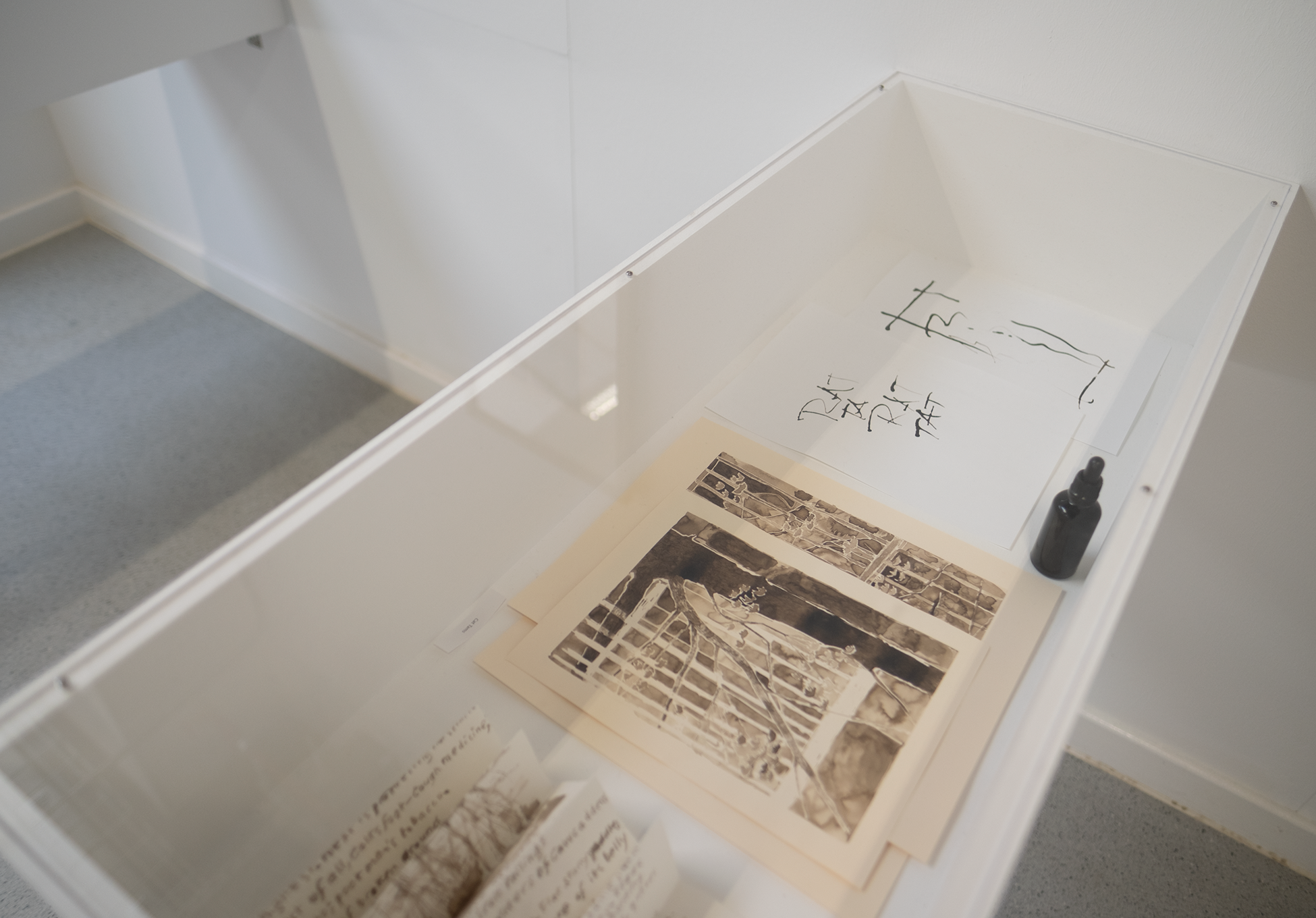
Justin Carter, The Event. 2025. Vitrines, bottle of ink, invitation letter with photograph, ink on paper, dimensions variable. Contributions from invited artists and writers will be added throughout the exhibition – each one invited to respond to the same ongoing ‘event’ on the fence boundary where a tree is forcing its way through the metal railings. [Photo credit: Michael Mersinis] 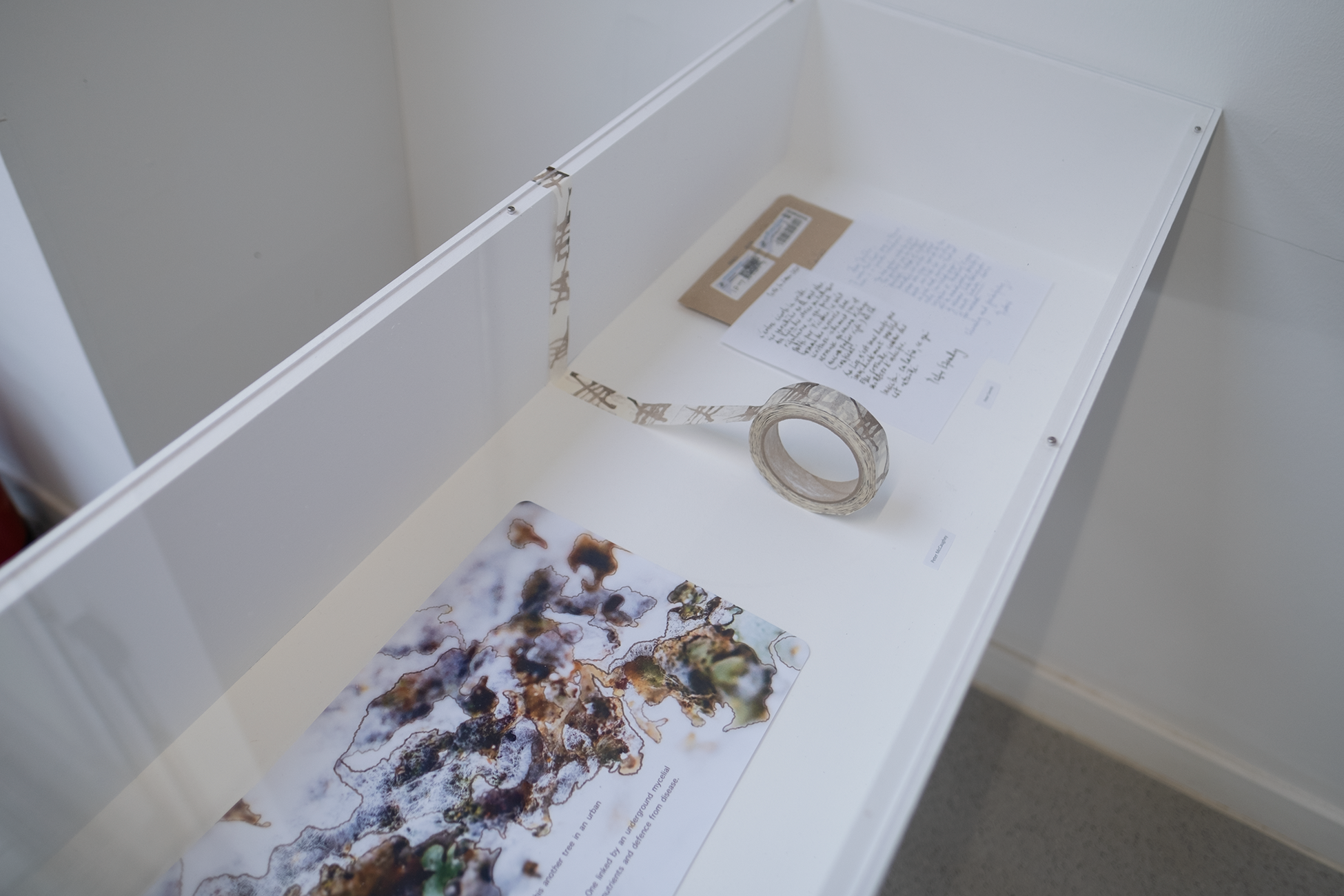
Justin Carter, The Event. 2025. Vitrines, bottle of ink, invitation letter with photograph, ink on paper, dimensions variable. Contributions from invited artists and writers will be added throughout the exhibition – each one invited to respond to the same ongoing ‘event’ on the fence boundary where a tree is forcing its way through the metal railings. [Photo credit: Michael Mersinis] 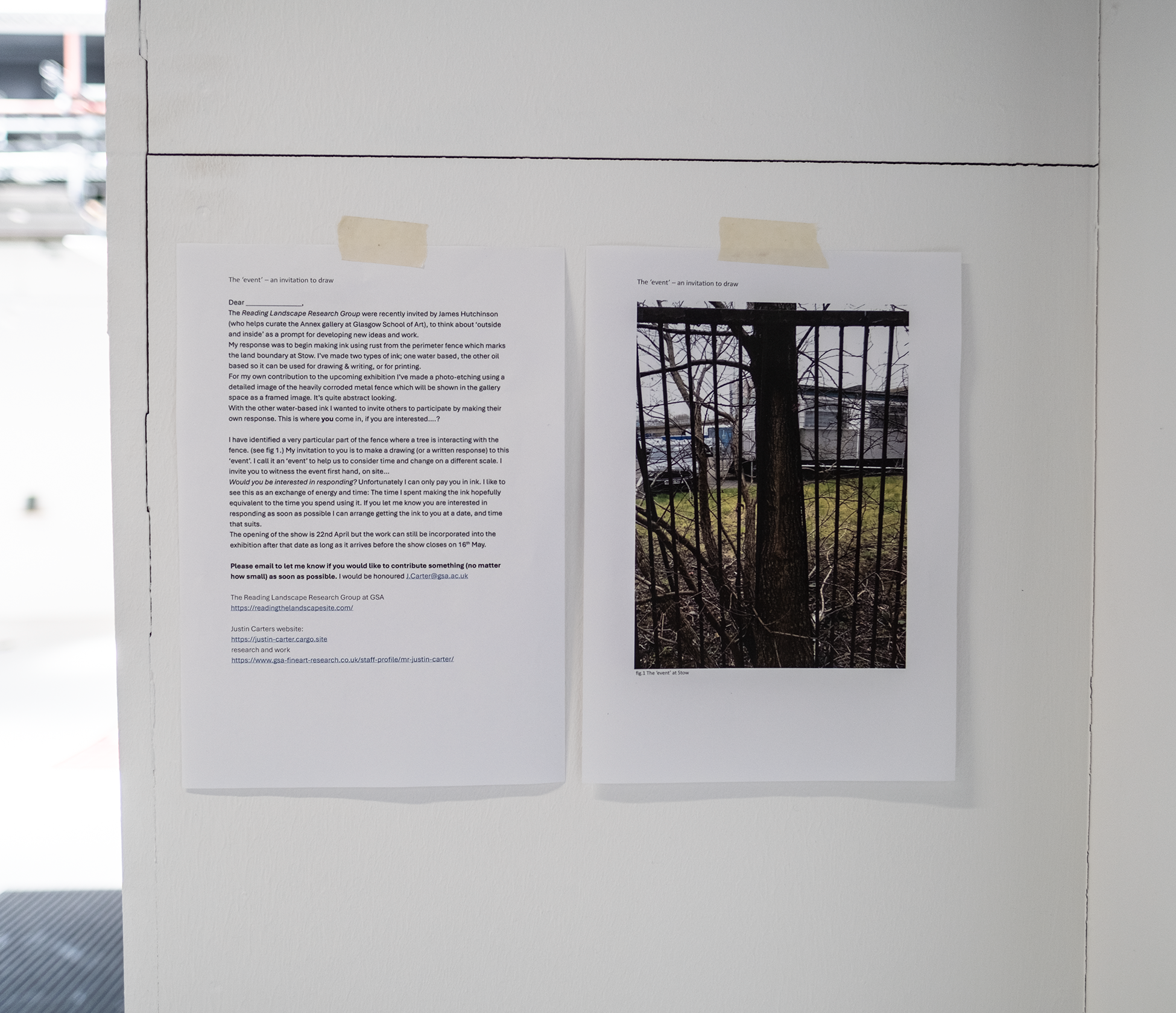
Justin Carter, The Event. 2025. Vitrines, bottle of ink, invitation letter with photograph, ink on paper, dimensions variable. Contributions from invited artists and writers will be added throughout the exhibition – each one invited to respond to the same ongoing ‘event’ on the fence boundary where a tree is forcing its way through the metal railings. [Photo credit: Michael Mersinis] 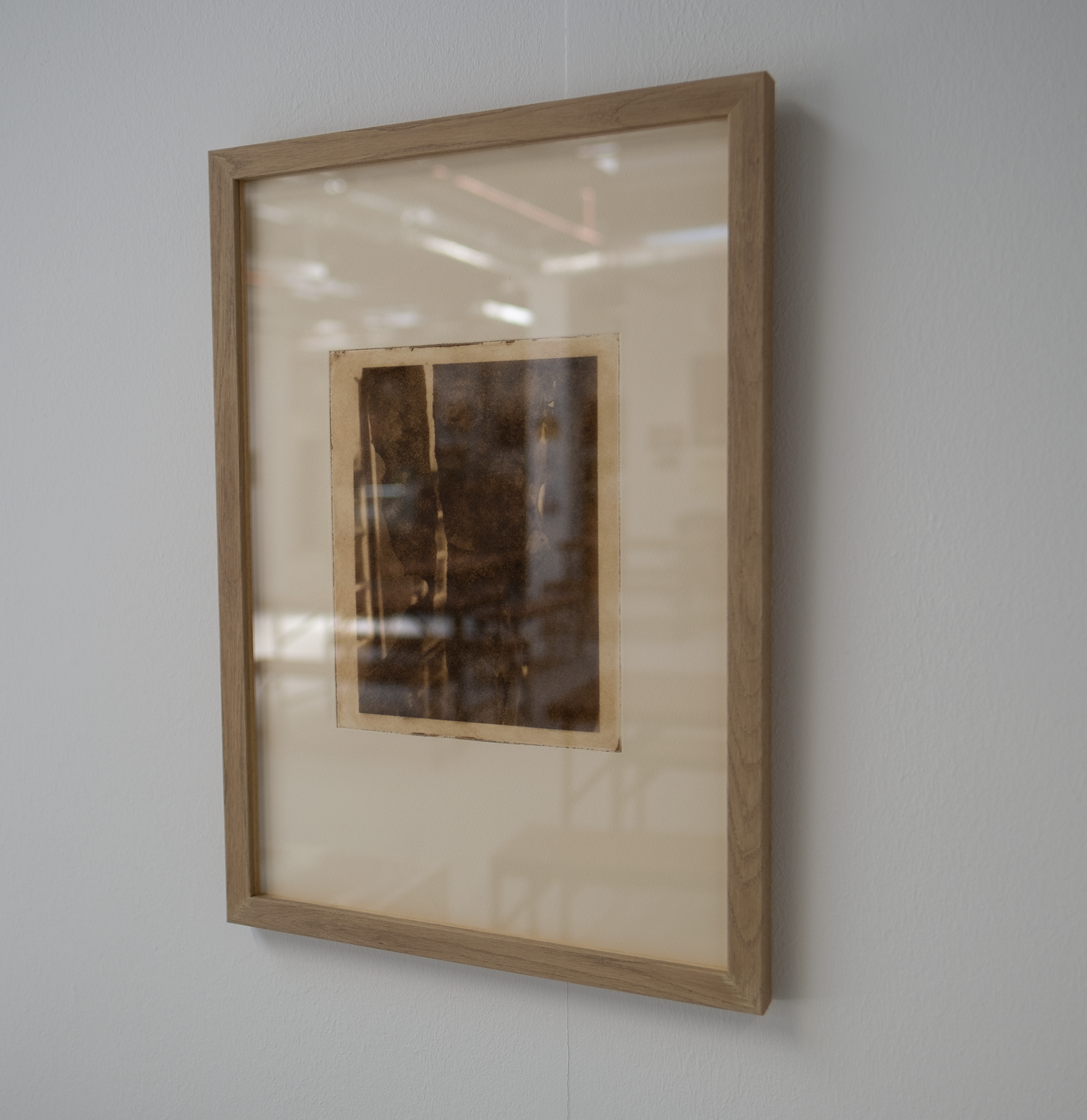
Justin Carter, Untitled (rust). 2025. Photo-etching printed with ink made from rust taken from the fence boundary at Stow. [Photo credit: Michael Mersinis]
I have been collecting rust from the fence marking the land boundary at Stow. I have been using it to make two kinds of ink; one water based for drawing and writing, the other oil based for printing. I am interested in the life cycle of materials – in this case, extracted minerals manufactured into steel, turning into rust before returning to the soil. The work explores energy and entropy and the dynamic qualities of supposedly inanimate objects and materials. I have made a photo-etching using the oil based ink.
The image features a detail of the heavily corroded fence from which the rust came.
I have invited a number of other artists and writers to collaborate with the water-based ink. I have asked them to consider ‘the event’; an ongoing moment of interaction between the fence and a tree on the fence boundary. “I call it an ‘event’ to help us to consider time and change on a different scale. I invite you to witness the event first hand”. Various contributions might enter the exhibition space throughout the run of the show including responses from Cat Tams, Frances Robertson, Jim Harold, Peter McCaughey, Edwina Fitzpatrick and Peter Szendy.
Peter Szendy, For an Ecology of Images (2025), London: Verso.
Jean-Michel Rabaté, Rust (2018), New York: Bloomsbury.
Jane Bennett, Vibrant Matter (2010), London: Duke University Press.
 Reading Landscape