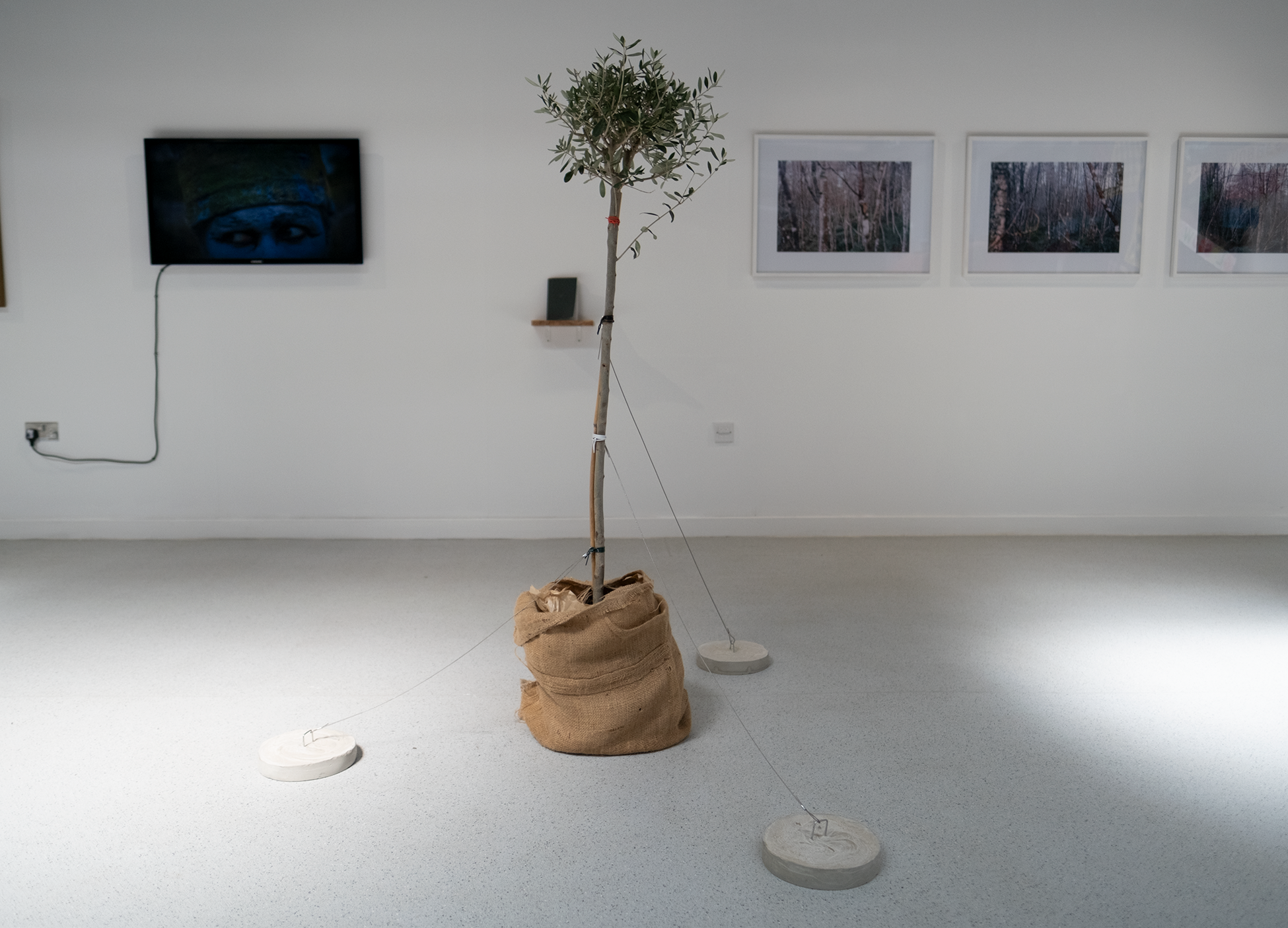
Michael Mersinis, Migrant Olive Tree, 2025, relocated sapling from Gaza’s olive groves. [Photo credit: Michael Mersinis] 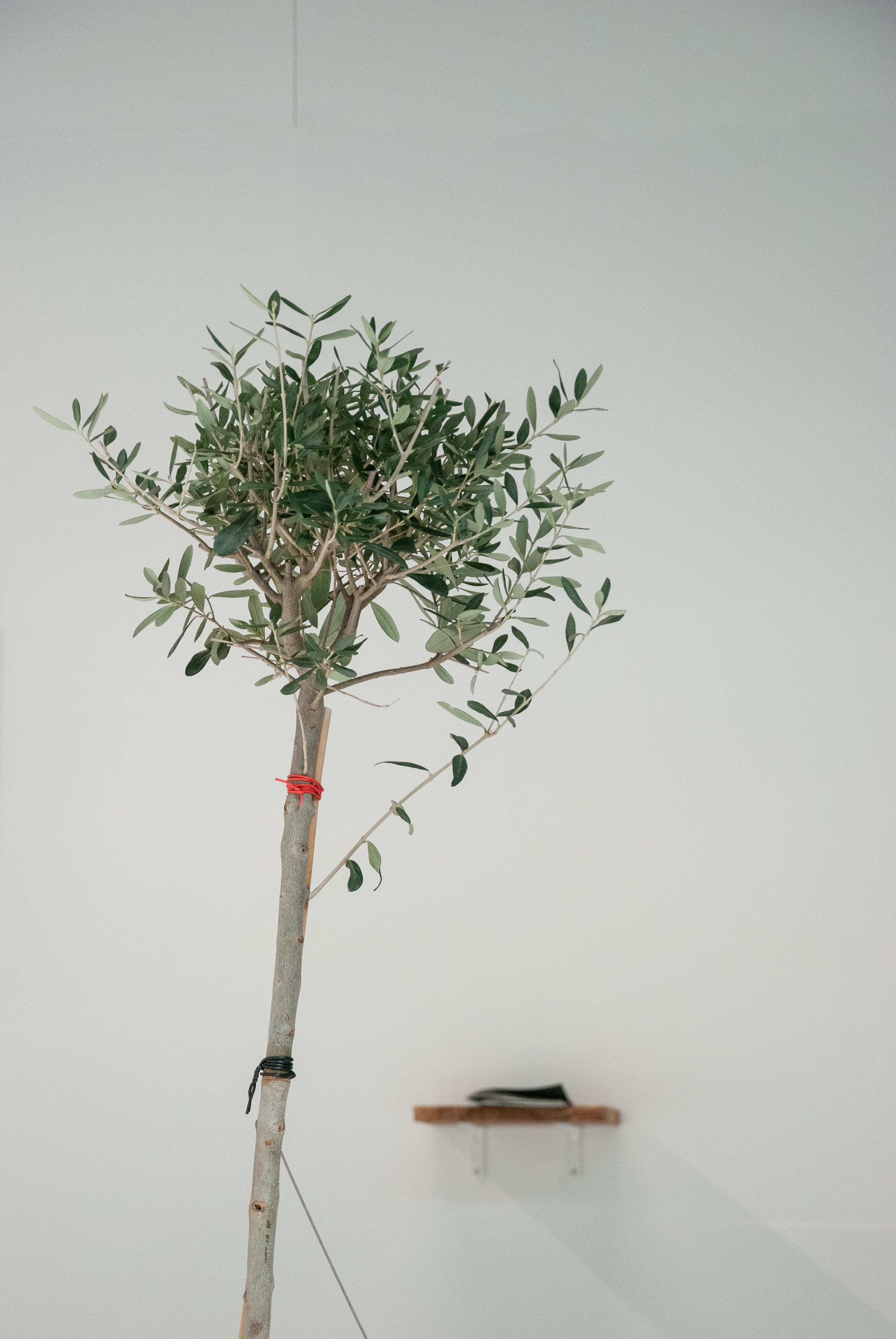
Michael Mersinis, Migrant Olive Tree, 2025, relocated sapling from Gaza’s olive groves. [Photo credit: Michael Mersinis] 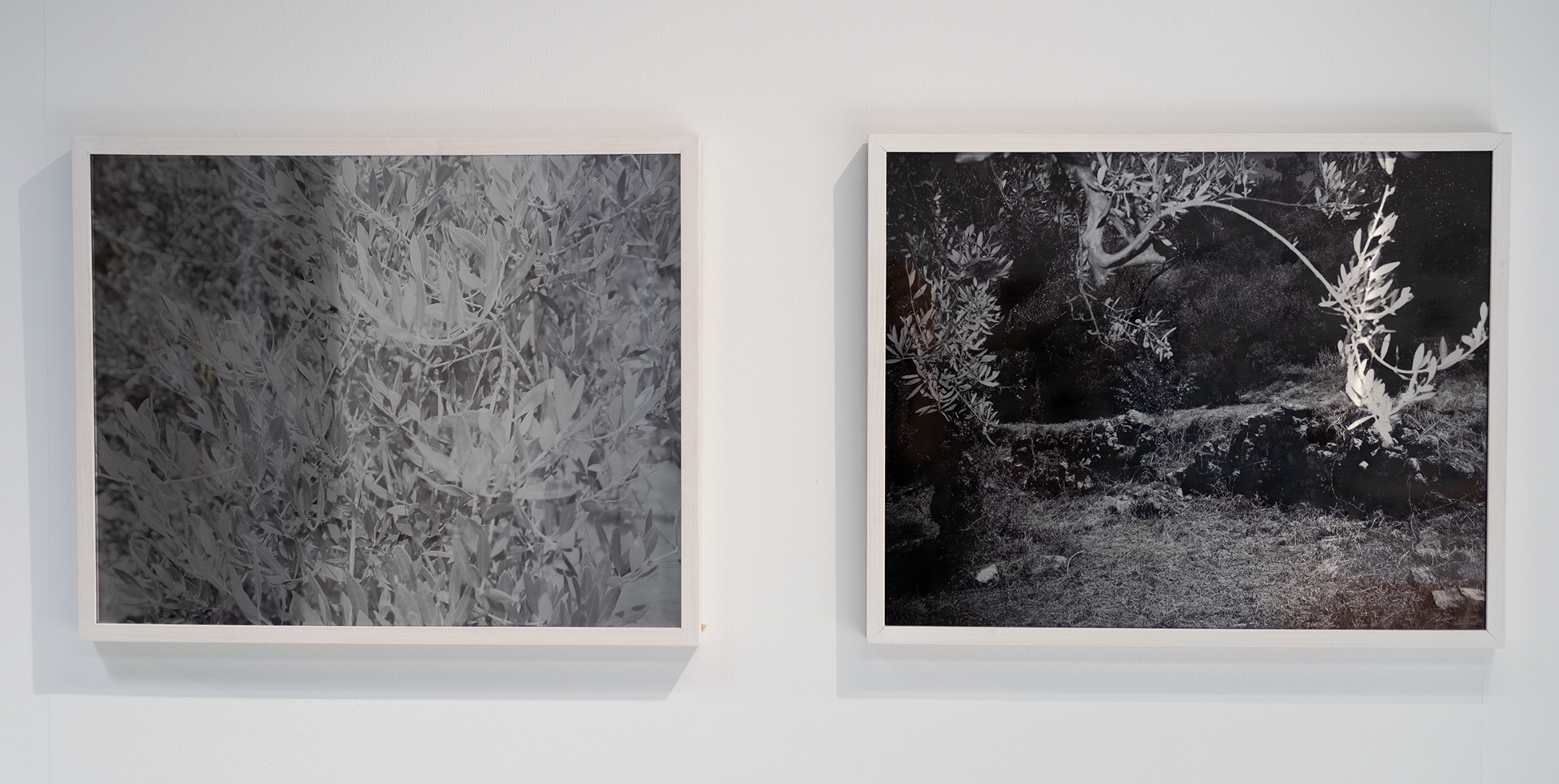
Michael Mersinis, Olive Tee / in situ / Kalamata I & II, 2023-2025, large format film printed on coated sterling silver plate. [Photo credit: Michael Mersinis] 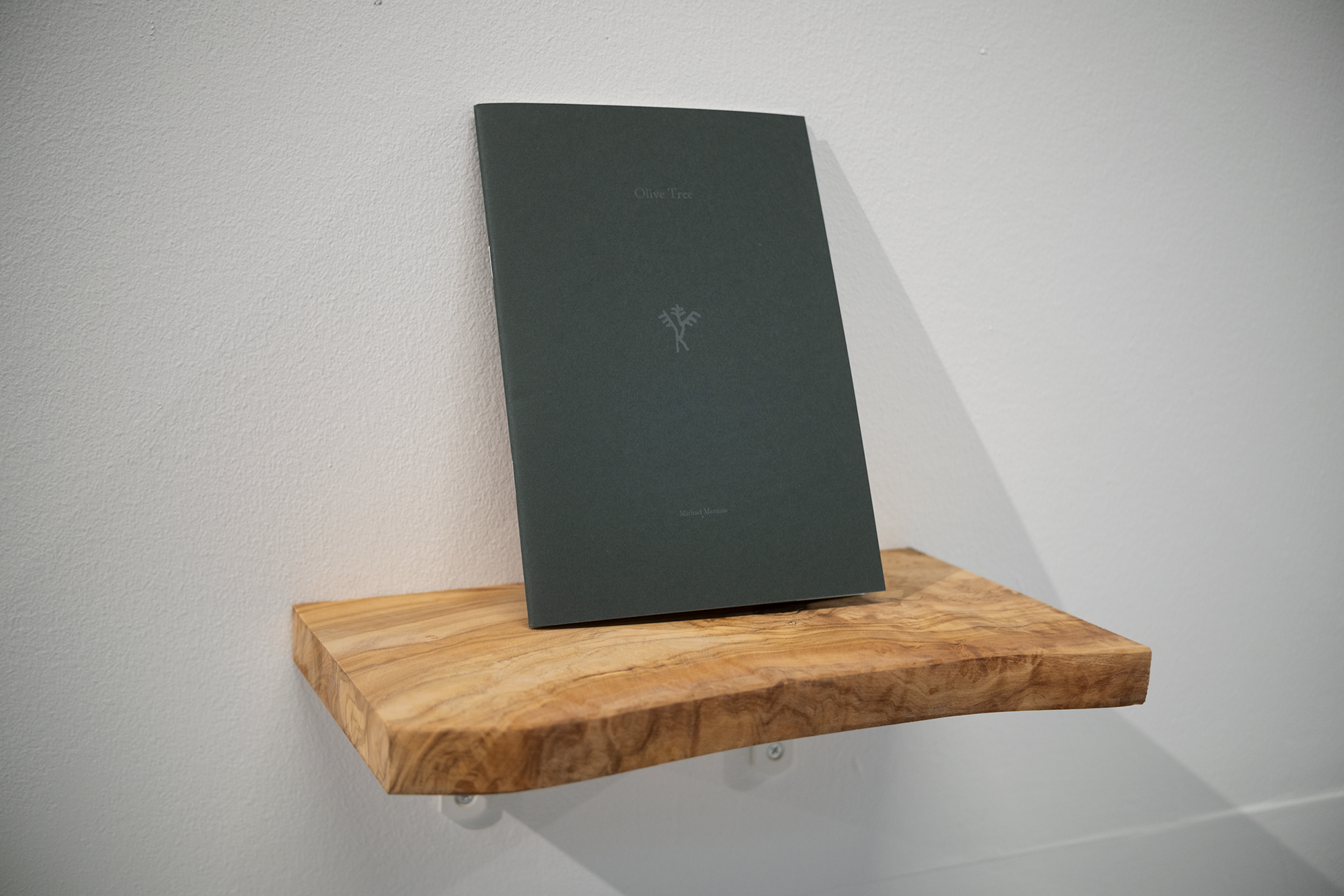
Michael Mersinis, Olive Tree, 2025, artist’s book, edition of 100. [Photo credit: Michael Mersinis] 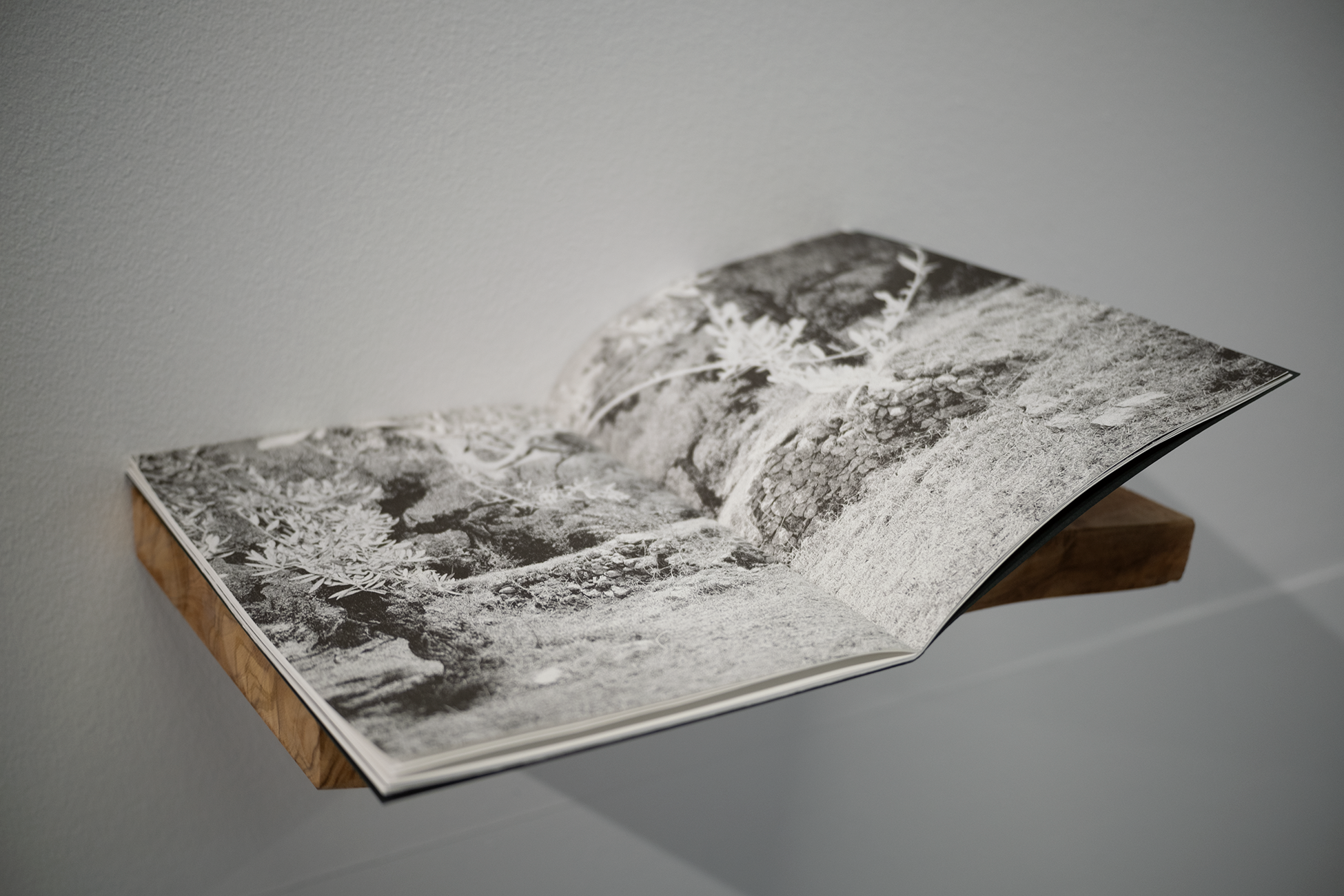
Michael Mersinis, Olive Tree, 2025, artist’s book, edition of 100. [Photo credit: Michael Mersinis] 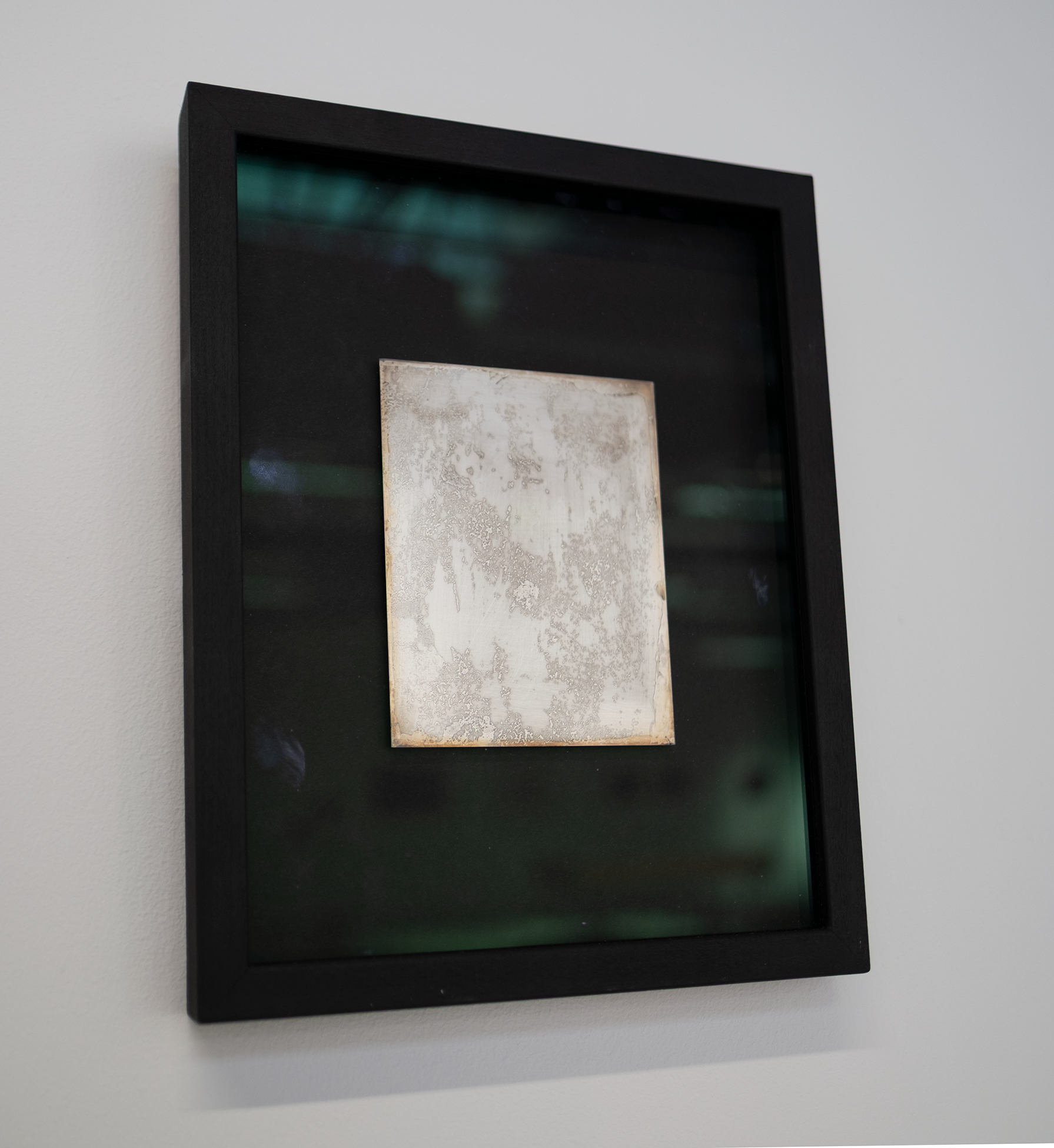
Michael Mersinis, Evental location / Earthquake, 2023-2025, Solid sterling sliver plate. [Photo credit: Michael Mersinis]
This work examines the uprooting of Palestinian olive trees as an act of green colonialism, where ecological narratives justify land dispossession and cultural erasure. More than a symbol of resilience, the olive tree’s destruction is a deliberate strategy to control Palestinian agricultural practices and restrict access to land. By transporting and caring for a sapling olive tree from Gaza over a year, I examine how environmental rhetoric is related to settler-colonial ambitions and how similar tactics can be used to think through ideas of displacement and migration while considering a dimension of environmental stewardship. The olive tree, in this work, is not only used literally but also aspires to function metaphorically—addressing contemporary conversations around migratory practices, forced movement, and the search for rootedness. By engaging with these themes, this work attempts to confront the intersection of ecology and power, revealing how landscapes become contested sites of resistance, memory, and survival.
Irus Braverman, Uprooting Identities: The Regulation of Olive Trees in the Occupied West Bank (2009) PoLAR: Political and Legal Anthropology Review, 32(2), pp. 237–264.
Theophrastus Enquiry into Plants (Historia Plantarum), Vols. I–II (1916). Translated by Arthur Hort. Cambridge, MA: Harvard University Press.
M. Al-Faiz, The Olive Tree: History, Biology, and Culture (2012), New York: Springer.
 Reading Landscape